Amp modelers have completely changed the way many guitarists build their rigs. Instead of carrying several amps, cabinets, and pedals, one device can recreate dozens of classic tones. With a good modeler, you can go from vintage clean sounds to modern high-gain metal, all with a few clicks or footswitches.
Some players use amp modelers for recording. Others rely on them for live shows because they are compact, flexible, and easy to connect directly to a PA. Modern modeling technology has improved a lot, and many units now sound extremely close to the amps they recreate.
There are many great modelers on the market today, from small budget units to full professional rigs. So the big question is: what’s the best amp modeler? Vote in the poll below and share your experience in the comments – your insight might help someone build their perfect rig!
1. Neural DSP Quad Cortex
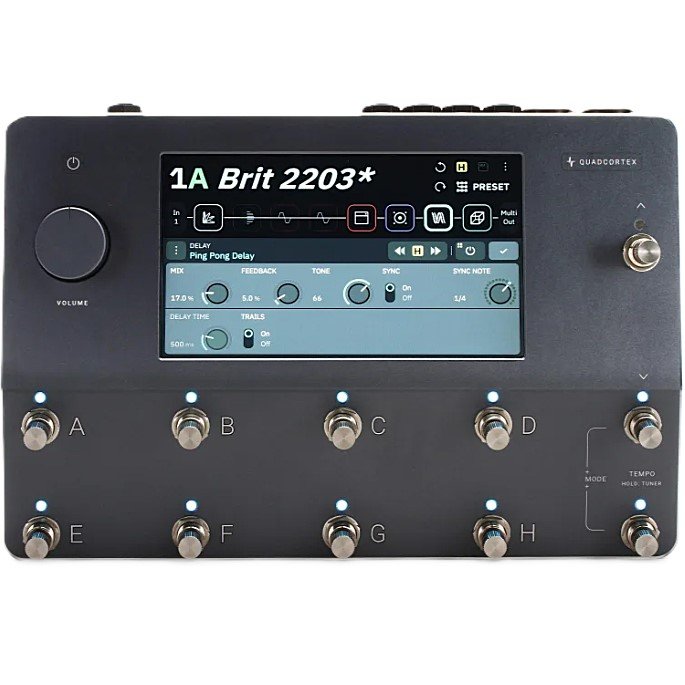
The Neural DSP Quad Cortex is a powerful floor processor that combines studio-grade guitar and bass tones with real-world gigging flexibility. This slim, self-contained unit is powered by 4 x SHARC+ and 2 x ARM cores, giving it huge processing power for detailed amp modeling, effects, and captures. It comes preloaded with over 90 amp models, more than 100 effects, and 1,000+ impulse responses (cabinet IRs) as building blocks for your rigs. You also get a built-in performance looper with up to 4 minutes and 44 seconds of recording time.
Neural Capture technology lets you recreate real amps, cabs, and pedals with amazing accuracy - no computer needed. You can download presets and Captures wirelessly from Cortex Cloud, or use the Cortex Control desktop app for full management and editing. Plug-in Compatibility (PCOM) allows selected Neural DSP plug-ins to run directly on the device. The elegant layout features a bright 7-inch multi-touch color display and 11 rotary footswitches for easy hands-on tweaking and navigation. Inputs and outputs are fully configurable with patch-by-patch routing, plus USB audio and MIDI connectivity for versatile setups. It supports multiple amp chains and even multiple players at once, so you and a bandmate can leave your amps at home.
Other features include built-in Wi-Fi for wireless preset sharing, firmware updates, and backups, unlimited set lists, three modes of operation, rugged anodized aluminum chassis with strengthened glass display, and flexible I/O. The Quad Cortex dramatically improves your performance life on tour or in the studio.
2. Line 6 Helix

The Line 6 Helix Floor is a multi-effects guitar processor that goes far beyond traditional pedals. It can serve as your complete rig, control your existing setup, replace your entire effects chain, or act as a high-quality USB audio interface for studio recording. Powered by a dual DSP HX modeling engine, it includes over 300 accurate models of amps, cabinets, microphones, and effects - all designed to feel and sound like the originals. You also get world-class polyphonic pitch-shifting effects and support for third-party impulse responses (IRs). The Helix offers huge flexibility with 10 inputs and 12 outputs (including 4 effects loops), 8-in/8-out USB audio interface, mic-level XLR input, S/PDIF, AES/EBU, and L6 Link digital outputs, plus 3 expression pedal outs. It has a clear 6.2-inch LCD display, 12 touch-sensitive footswitches with assignable RGB LED rings and customizable LCD scribble strips for easy editing and navigation. You can use preset or stompbox modes, an integrated looper, and true preset spillover so effects like delay and reverb continue smoothly when changing patches. The solid aluminum construction and tour-grade footswitches make it reliable for stage use. With so many pro-level features, the Helix is a complete, inspiring tool for live performance and recording.
3. Fractal Audio Axe-Fx III Mark II Turbo

The Axe-Fx III Mark II Turbo is the most advanced and powerful guitar processor from Fractal Audio, designed for guitar, bass, and other instruments. It is a rackmount unit that delivers unmatched tone, flexibility, and performance for both stage and studio use. It features industry-leading Cygnus X2 amp modeling, which recreates the sound and feel of real tube amplifiers with extreme realism. This technology models every circuit, tube stage, and control individually so the response and interaction match the originals perfectly - from vintage classics to modern high-gain amps. The Turbo version has 25% more processing power than the standard Axe-Fx III, thanks to four separate processors (2 × DSP + graphics + USB/control). This allows for even more complex presets and smooth performance.
Key highlights include: Amp Modeling - Cygnus X2 with two separate amp blocks per preset. Speaker Simulation - DynaCab and UltraRes with over 2,200 factory cabs and 2,048 user slots. Effects - A massive library of stompbox and studio effects, with multiple instances allowed per preset. Presets & Scenes - 1,024 presets, 8 scenes per preset, 4 channels in most blocks, and gapless switching. I/O - Instrument input, 3 stereo inputs, 4 stereo outputs, Humbuster technology, SPDIF & AES digital I/O, MIDI, dual expression pedal inputs. USB Audio - 8×8 interface for recording, playback, and re-amping, plus MIDI over USB. Control - Large high-contrast color display with five push encoders for fast editing; supports optional FC-6/FC-12 foot controllers. Build - Rugged 3U steel rack with anodized aluminum faceplate and illuminated logo. Software - Axe-Edit III for Mac/PC with drag-and-drop preset editing. Updates - Free firmware updates add new amps, effects, and features over time.
This unit is the top choice for professional players who want the best possible sound without compromise, whether live or in the studio.
4. IK Multimedia Tonex

The IK Multimedia TONEX Pedal brings the powerful guitar modeling of the TONEX ecosystem from the studio to the stage in a portable, computer-free unit. You can load and store up to 150 of your favorite Tone Models (including amplifiers, cabinets, pedals, or complete rig setups) directly on the pedal. It comes with TONEX MAX software and AmpliTube 5, plus 1,000 Premium Tone Models from IK Multimedia that recreate rare and classic gear with amazing accuracy. You also get free access to thousands of user Tone Models on ToneNET. Use the TONEX software or iOS app to download models, or capture your own gear with TONEX Capture. You can load custom IRs for perfect tone matching. The pedal has 150 presets in 50 banks of three slots each for quick recall. Built-in tools include parametric EQ, gain, volume, noise gate, compressor, five stereo reverbs, and analog-modeled EQ. It works as a 24-bit/44.1kHz USB audio interface, has a headphone output, full MIDI I/O (5-pin DIN), stereo outputs, and an easy-to-read screen. Made in Italy with a strong aluminum chassis, this pedal is built for road use and becomes the heart of any live or studio setup.
5. Fractal Audio FM9 MKII Turbo

The FM9 Mark II Turbo is the ultimate all-in-one floor unit for guitar, bass, and other instruments. It combines high-end amp modeling, effects processing, foot control, and USB audio in a rugged, road-ready floorboard format. This Turbo version has 10+% more processing power than the original FM9, thanks to four DSP cores. This allows complex presets and extreme performance. It uses industry-leading Cygnus X2 amp modeling, which recreates the sound and feel of real tube amps with exceptional realism. Every circuit, tube stage, and control is modeled individually for authentic tone, dynamics, and response. You get two separate amp blocks per preset. Speaker simulation includes DynaCab and UltraRes technologies, with over 2,200 factory cabs and 1,024 user slots. The effects library comes from the Axe-Fx III, offering hundreds of world-class stompbox and studio effects with multiple instances allowed per preset. You can store 512 presets, each with 8 scenes and 4 channels in most blocks, plus gapless switching for smooth transitions. Connectivity is excellent: instrument input, 2 stereo inputs, 3 stereo outputs, Humbuster technology, SPDIF digital I/O, MIDI, and 3 expression pedal inputs. It functions as an 8×8 USB audio interface for recording, playback, and re-amping, with MIDI over USB. The durable steel chassis with protective endcaps is built for touring. FM9-Edit software (Mac/PC) provides complete editing and librarian features. Free firmware updates add new amps, effects, and capabilities over time. This unit is designed for players who want flagship-level performance in a compact, floor-based design.
6. Kemper Profiler
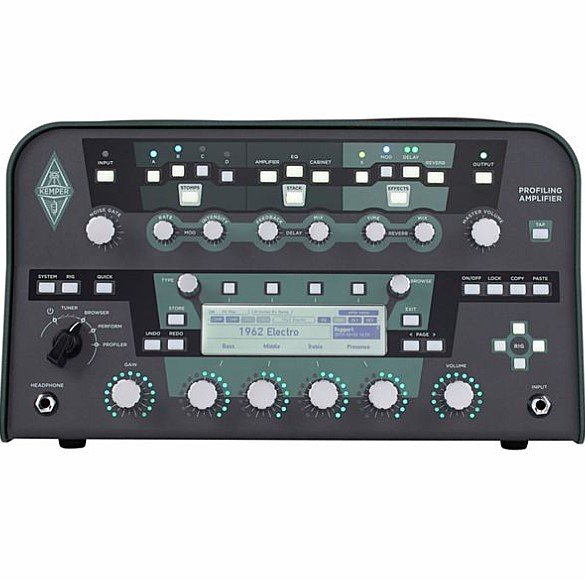
The Kemper Profiler, introduced by Christoph Kemper in 2012, changed guitar amplification with a new approach: it digitally captures and recreates the exact sound and response of any real guitar amp, cabinet, and microphone setup. Instead of simply modeling amps, the Kemper "profiles" them using advanced measurement techniques and algorithms to copy their "DNA", including dynamics, feel, and nuances, for highly authentic results. You can profile your favorite studio or live rig, save it, and use it anywhere. Profiles can be adjusted inside the device, such as changing power amp sag, tube bias, or swapping cabinets. The effects section includes stompboxes before the amp (for gain shaping) and studio-grade effects after it (like reverb and delay). Up to four simultaneous stompbox effects, plus EQ, gain, definition, and more, make the sound flexible and complete. For live use, it keeps your best sounds ready and consistent. At home, it lets you practice at low volume (or with headphones) while keeping full tube-amp tone. Overall, the Kemper is a powerful tool for modern guitarists who want real amp sounds with total flexibility, whether in the studio, on stage, or at home.
7. Blackstar ID:X Floor Three
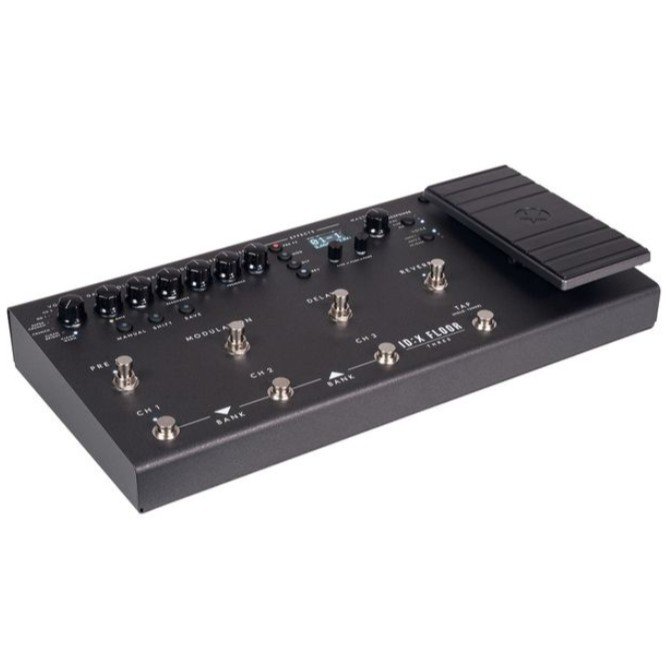
The Blackstar ID:X Floor Three is a powerful floorboard multi-effects pedal that serves electric, acoustic, and bass guitarists with a huge range of tones in one compact unit. It combines easy knob-based controls with advanced digital processing for authentic, dynamic sounds. It features 12 guitar amp models (classic Blackstar and Ampton tones), 3 bass amp models, 2 acoustic voices, and a very realistic acoustic simulator. Blackstar’s patented ISF lets you shape tone with one knob, while the Power Valve Response switch emulates EL84, EL34, or 6L6 tubes. “In The Room” technology adds the feel of a real-world amp, and CabRig speaker simulation recreates cabinets, mics, and rooms without latency. You get over 35 premium effects, editable right on the panel, plus an expression pedal for real-time control. The OLED screen makes navigation clear, and you can save up to 99 patches for instant recall. USB-C works as an audio interface, Architect software allows deep editing and sharing, and stereo balanced CabRig outputs, stereo headphone out, and MIDI input add versatility. This lightweight pedal puts a complete tonal universe at your feet for live, practice, or studio use.
8. Kemper Profiler Head MK 2
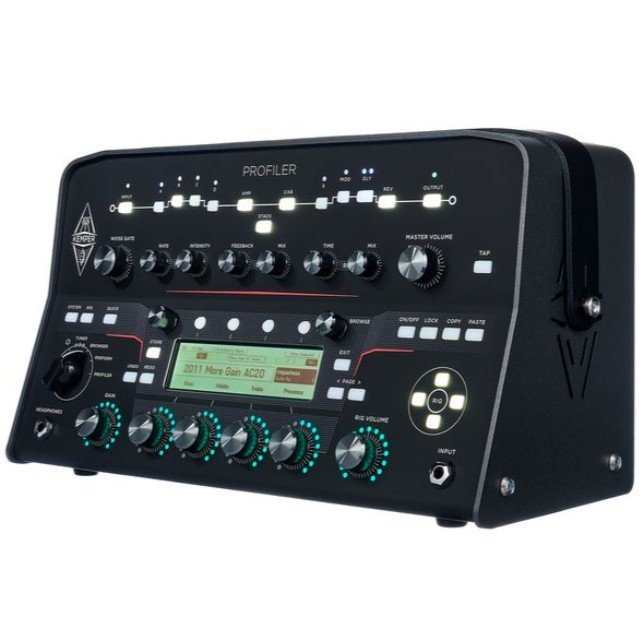
The Kemper Profiler Head MK 2 is a big upgrade to Kemper’s flagship amp profiler, delivering faster performance and higher sonic precision. The new processing engine provides quicker boot times (around 20 seconds), a snappier user interface, and improved responsiveness overall. The MK 2 advances profiling technology to a new level of accuracy, capturing real amplifiers with unmatched detail. You can create exact digital profiles of your own physical signal chain, share them online, or download profiles from the community. It now supports up to 20 audio blocks in series with zero added latency. The effects section gains seven new slots and many fresh effects. You get all the classic features: hundreds of onboard amp profiles and rigs, studio-grade effects, pristine cab sims, extensive EQ, a built-in FX loop, MIDI functionality, and Rig Manager app support (Windows/macOS) for editing and organization. An 8-channel USB audio interface enables easy multitrack recording and re-amping into your DAW. The looper offers 2 minutes of recording time with half-speed, reverse, overdub, and undo. Outputs include full-range, guitar cab, and Kemper Kone modes. Performance mode ensures seamless preset switching, and up to four expression pedals can control multiple parameters. Extensive I/O covers 1/4-inch and XLR mains, monitor out, send/return, S/PDIF, MIDI In/Out/Thru, Ethernet, and USB. A front headphone jack supports silent practice. With updated modern visuals and a sleek design, this unit revolutionizes studio and stage work for guitarists.
9. Kemper Profiler Stage MK 2
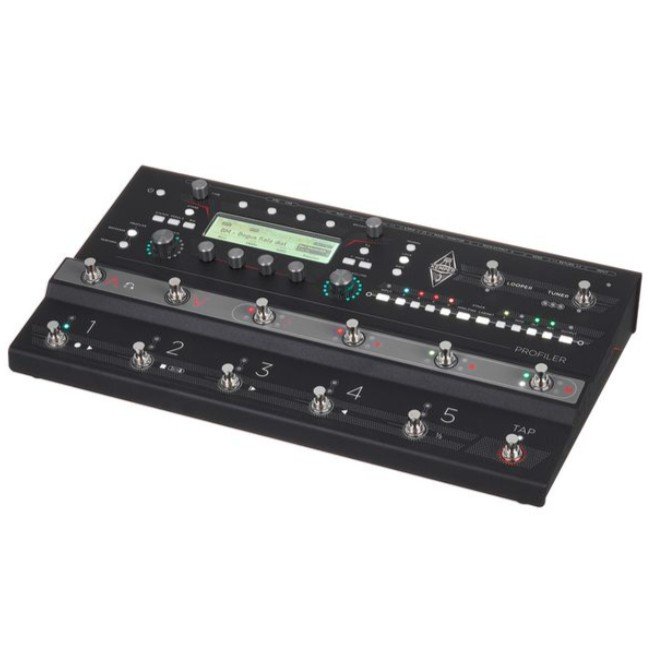
The Kemper Profiler Stage MK 2 is the latest evolution of Kemper’s flagship floor unit, combining the upgraded Profiler MK 2 processing power with the hands-free control of the Profiler Remote in one compact, performance-focused package. This version brings faster boot times (around 20 seconds), a snappier user interface, and major improvements in profiling accuracy for more lifelike amp emulations. The MK 2 introduces up to 20 audio blocks per rig letting you build complex, effect-heavy signal chains with zero added latency. It retains all the core strengths of the original: hundreds of onboard amp profiles and rigs, the ability to create precise digital captures (profiles) of your real amplifiers, studio-grade effects, pristine cabinet simulations, extensive EQ options, a built-in FX loop, and full MIDI functionality. You can edit and organize everything via Kemper’s free Rig Manager software (Windows/macOS). Hands-free operation is seamless with five main footswitches for rig switching (plus secondary looper functions), four assignable effect buttons, bank up/down switches, and a dedicated tuner footswitch. The looper offers 2 minutes of recording time with half-speed, reverse, overdub, and undo capabilities. You can connect up to four expression pedals to morph multiple parameters in real time. The output section includes full-range, guitar cab, and Kemper Kone modes. The I/O is comprehensive: 1/4-inch and XLR main outputs, 1/4-inch monitor output, direct send/return, S/PDIF, MIDI In/Out, Ethernet, and USB (8-channel audio interface for multitrack recording and re-amping). With updated modern visuals, this MK 2 unit is built for touring, studio, and creative work.
10. Line 6 Helix Stadium XL
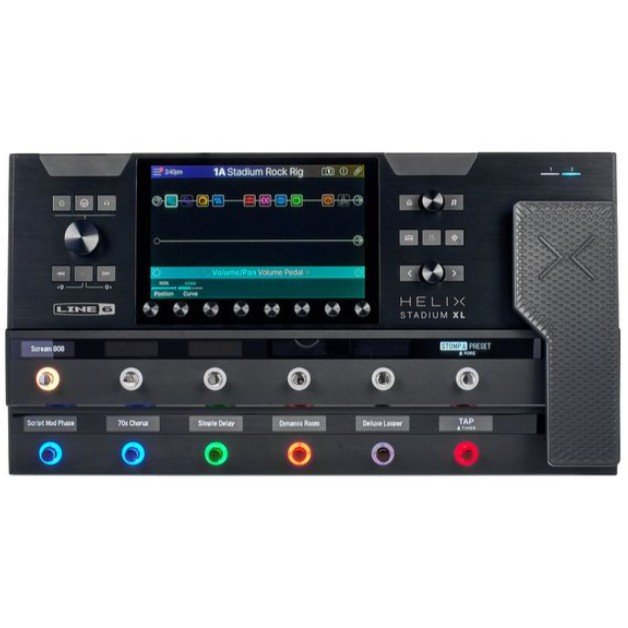
The Line 6 Helix Stadium XL is the next generation of the Helix series, pushing amp and effect modeling to new heights with Agoura technology. It delivers great sonic accuracy by modeling every circuit component and its interactions, resulting in lifelike tone and feel. You get 16 Agoura-powered guitar amp models and 6 bass amps right out of the box. The innovative Hype knob lets you switch from precise emulations to polished, record-ready versions. Complete preset compatibility with existing Helix/HX products ensures seamless integration. A high-resolution 8-inch touchscreen provides intuitive navigation and editing. Twelve footswitches with high-contrast OLED scribble strips make preset and effect control fast and clear. An assignable expression pedal with toe switch offers real-time parameter control. The Showcase engine automates entire tracks - split, mix, jam along, flag transitions, and even control lights, video, or other gear. Focus View gives deep, context-based editing for the current model. The Matrix Cue Mixer creates independent mixes for different outputs. It is 25% smaller and 21% lighter than the original Helix floorboard, with enhanced sound quality. Wi-Fi and Bluetooth support wireless control, while free Helix Stadium editing software fine-tunes every detail. Additional features include thousands of loadable IRs with nested folder organization, USB audio interface for direct DAW recording, and the upcoming cloud-based Proxy cloning engine. This floorboard is a complete, professional solution for stage, studio, or creative exploration.
11. Hotone Ampero II Stage

The Hotone Ampero II Stage combines amp modeling, effects processing, and audio interface capabilities in a compact, performance-ready design. It offers true stereo processing for wide, detailed sound fields. You can use it with electric guitars, basses, acoustic instruments, synths, keyboards, or microphones (with 48V phantom power and up to 52dB gain). The tri-core DSP and ESS Sabre AD/DA converters deliver 24-bit/44.1kHz audio with 127dB dynamic range for clear, realistic tone. It includes over 60 effects, modeled amps, cabs, power amps, preamps, pedals, and IRs (including 20 Celestion speaker IRs). Sound Clone technology lets you create digital copies of your own gear, and it supports NAM file conversion. The IR loader has 50 custom slots with doubled bandwidth for high-resolution sound. You get an upgraded 60-second true-stereo looper, 300 preset slots (60 banks of 5 patches), multiple series/parallel routing options, a stereo FX loop, dual TRS MIDI ports, dual expression/control jacks, Bluetooth audio/MIDI, and Wi-Fi for updates and community presets. It functions as an 8-in/8-out USB audio interface. The free Hotone software (Mac/PC) handles editing, IR management, and firmware updates. With its advanced modeling (CDCM HD and F.I.R.E. systems), extensive connectivity, and easy workflow, the Ampero II Stage is a complete solution for live shows, practice, and studio work.
12. Kemper Profiler Stage
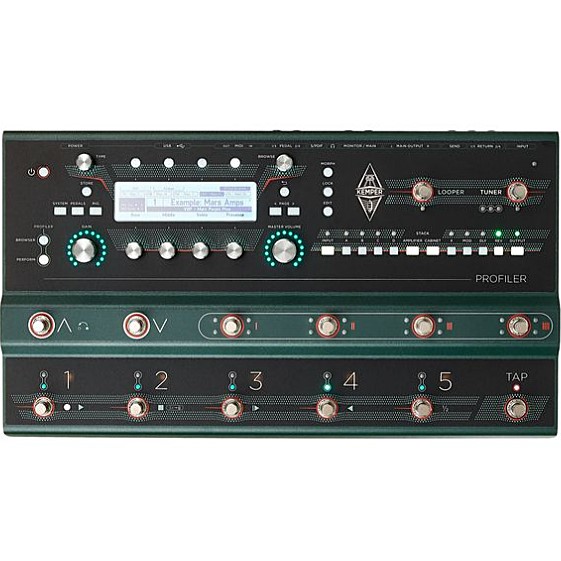
The Kemper Profiler Stage brings ultimate convenience to the Profiler family by combining the full Kemper Profiler amplifier with the Profiler Remote foot controller in one compact, pedalboard-friendly unit. It uses the same technology to capture the exact sonic DNA of any guitar amp, cabinet, and microphone setup. It comes pre-loaded with hundreds of high-quality profiles from professional studios worldwide. The backlit, sunlight-readable display is easy to read in any lighting, and the rugged housing is built for touring, perfect for dark stages or bright outdoor shows. Five buttons give direct access to five rigs per performance (tap to select, tap again for morph), with a bank system for full set changes. Four assignable effect buttons control pre- and post-amp effects, action functions, or freeze modes like Delay Infinity. Dedicated buttons handle tuner, looper, tap tempo, and more. Connect up to four expression pedals or external switches for continuous parameter control. Dedicated stereo monitor outputs drive two full-range or guitar cabinets, independent of the main stereo feed. Two stereo effects loops with returns allow integration of pedals or outboard gear. Connections include: 6.3 mm input, four stereo returns, main XLR/6.3 mm stereo outs, monitor 6.3 mm stereo outs, two sends, four footswitch/expression jacks, 3.5 mm headphone out, MIDI In/Out/Thru, S/PDIF In/Out, and USB. This all-in-one solution is ideal for live performances, studio work, or any guitarist who wants maximum power and flexibility in a single unit.
13. Headrush Prime
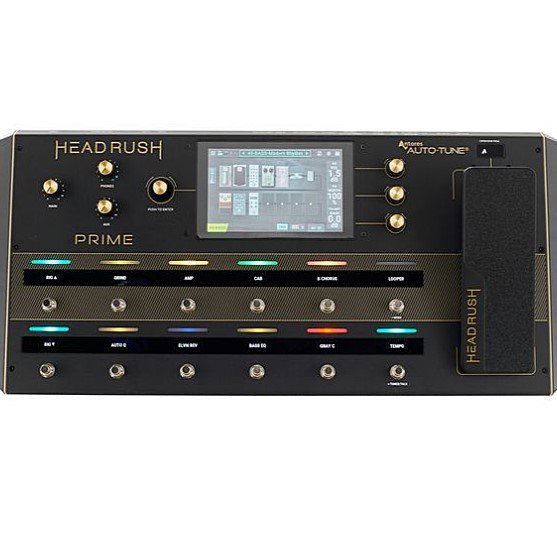
The Headrush Prime is an all-in-one floor processor that combines guitar multi-effects, amp modeling, vocal processing, and more into a single pedal. It replaces your entire stage or studio rig (except your guitar and voice) and works perfectly for solo performers or guitarists who also sing. It includes a huge library of authentic amp, cabinet, and microphone models, plus many guitar and vocal effects (including Antares Auto-Tune). You can clone your own amps, pedals, preamps, distortion, overdrive, and fuzz units to make near-perfect digital copies.
Preset switching is gapless, so reverb and delay tails continue smoothly when you change sounds. The built-in drum machine has 16 pro kits and 134 styles across 15 genres for jamming. TIDAL integration lets you stream songs, loop sections, slow them down, transpose pitch, or practice tricky parts. Connect to the Headrush Cloud via Wi-Fi for endless user-generated clones, preset sharing, and custom IRs. Bluetooth connects to mobile devices, and a custom multicore DSP system ensures smooth performance. The strong steel chassis is road-ready. You get a built-in expression pedal, 12 footswitches with color LEDs and OLED scribble strips for custom workflow, stereo effects loop (great for hardware pedals or 4-cable method), and USB audio interface functionality. This makes the Headrush Prime a simple, complete solution for live shows, practice, or recording.
14. Boss GT-1000

The Boss GT-1000 is one of the most powerful multi-effects and modeling units available today. It combines excellent amp and effects models with advanced 32-bit/96kHz processing for realistic feel and sound quality that must be heard. It uses Roland’s Tube Logic technology, Augmented Impulse Response Dynamics (AIRD), and multi-dimensional processing from BOSS’s Waza and Katana amps. You get a wide selection of amp and effect models to build your perfect tone. The rear panel includes effects loops, MIDI I/O, external control options, and two XLR stereo outputs. A USB connection allows deep editing and direct recording. An onboard volume/expression pedal and controls for external pedals or amps add more flexibility. Two modes (Manual and Pedalboard) change the footswitches to control individual effects blocks. AIRD Output Select includes 11 guitar types and 2 bass types for perfect matching to any setup. This all-in-one pedal works great for live performances, home practice, or studio recording.
15. Boss GX 100

The Boss GX-100 is a compact multi-effects floorboard that brings many of the best amp and effect models from the flagship GT-1000 into a smaller, gig-friendly design. It is perfect for guitarists and bassists who perform live. It uses advanced 24-bit AD/DA conversion, 32-bit floating-point processing, and 48kHz sampling for excellent sound quality. The AIRD (Augmented Impulse Response Dynamics) technology creates 23 realistic amp models that feel and respond like real tube amps. You also get over 150 effects, and you can use up to 15 simultaneous effects blocks with flexible routing. The vivid color touchscreen is easy to see even in bright daylight. You can edit patches directly on the pedal or use the BOSS Tone Studio app. An onboard expression pedal with toe switch works like a classic wah. Extra features include freely assignable footswitches, external control inputs, MIDI in/out, a send/return loop for the 4-cable method, amp channel switching, USB recording interface, and IR loading. An optional Bluetooth adaptor (sold separately) adds wireless editing and audio streaming from mobile devices. This pedal gives you everything needed for confident live performances.
16. Fender Tone Master Pro
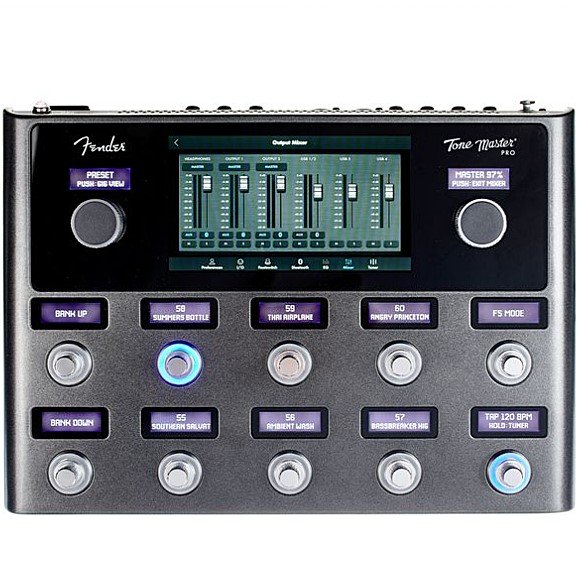
The Fender Tone Master Pro is a powerful multi-effects guitar workstation that combines advanced digital modeling with the warm, authentic tone of classic tube amps. It uses Fender’s precise Tone Master technology to recreate over 100 amplifiers and effects, capturing every detail and nuance from iconic Fender amps and other legendary gear. The pedal has a clear 7-inch full-color touchscreen, two rotary knobs, and 10 footswitches with LCD scribble strips for easy control. You get over 6,000 impulse responses (IRs), a cab editor, third-party IR support, and more than 500 preset slots with true spillover for delay and reverb tails. It offers two simultaneous signal chains with parallel options, a 60-second looper with reverse and half-speed modes, four FX loops (with stereo capability on 3 and 4), an XLR mic input with phantom power, Bluetooth audio streaming, USB audio interface, headphone jack, MIDI, and Song/Set List modes for gigs. The strong metal chassis weighs under 9 lbs. for easy portability. This is Fender’s most complete modeling unit yet, perfect for stage or studio.
17. Valeton GP-200

The Valeton GP-200 is a powerful and versatile floorboard multi-effects processor that offers an enormous variety of sounds, effects, and connection options. You get over 140 first-class amplifier models created with advanced HD Modeling technology. These deliver remarkably accurate tone and response, covering everything from clean US-style sounds for country, to crunchy early rock and blues tones, all the way to high-gain distortion for hard rock and modern metal. The effects section includes over 100 pedal simulations: drive, distortion, fuzz, modulation (chorus, flanger, phaser), delays, echoes, reverbs, dynamics, EQs, and more - all in excellent quality. The user interface is clear and intuitive. A bright 4.3-inch TFT color display shows all settings at a glance. Eight freely assignable footswitches with LEDs make presets easy to access, even on dark stages. Connectivity is very flexible: stereo outputs, two balanced XLR outs for live or recording, headphone jack for silent practice, effects loop for extra pedals, and a USB-C port that turns it into an audio interface. It supports classic setups, multiple amps, or direct-to-PA use. Whether at home, in the studio, or on stage, the GP-200 gives you the right sounds and tools in a compact, road-ready package.
18. Nux MG-30

The Nux MG-30 takes NUX's White Box Amp Modeling Technology to a higher level. It delivers clearer, more dynamic, and realistic tones with improved audio definition. You get 35 amp models inspired by classic sounds, covering blues, pop, classic rock, and high-gain metal. It includes authentic cabinet, microphone, and acoustic impulse responses (IRs), plus a wide range of effects like modulation, overdrive/distortion, EQ, gate/compression, and more. Two NXP RT processors drive cabinet, mic, and acoustic IRs at 1,024-sample resolution for faithful tone. You can load your own IRs, use 11 signal blocks, and route them with post-FX parallel options. Practical features include a phrase looper, drum machine, metronome, USB audio interface, and QuickTone editing software for saving and customizing presets. The 4-inch color LCD screen makes everything easy to see and adjust. Versatile I/O fits any setup. This all-in-one unit sparks creativity for stage, studio, or practice.
19. Harley Benton DNAfx Git

The Harley Benton DNAfx Git is an amp modeling multi-effects processor that brings legendary guitar tones to your setup. It packs the sound of classic and modern amps, cabinets, and effects into a compact, road-ready pedal with a built-in expression pedal and two footswitches for live control. You get 55 high-quality amp models using non-linear technology for real tube-like feel and response, 26 impulse response (IR) speaker simulations (plus support for third-party IRs), and 151 effects including drives, compressors, EQs, modulation, wah, pitch, filters, delays, reverbs, and more. Up to 9 effects can run at once. A large color LCD display makes navigation easy, and you can save up to 200 presets. Other features include an 80-second phrase looper, a drum machine with 40 patterns and 10 metronome rhythms, tap tempo, chromatic tuner (435–445 Hz), USB for editing / recording / updates, headphone output, AUX input, OTG for smartphone/tablet use, and programmable stereo outputs. The robust ABS/aluminum housing measures 230 x 156 x 32.8 mm and weighs 1 kg. It runs on the included 9V DC 300 mA power supply (no battery operation). This is a complete, portable guitar rig for gigs, practice, or songwriting at a great price.
20. Mooer GE300

The Mooer GE300 is a multi-effects processor and amp modeler that combines many advanced features in one unit. It uses dual-DSP processors for detailed, high-quality modeling of amps, effects, and more. You get 108 digital amp models based on real tube amps, using Mooer’s non-linear technology for accurate tone and dynamic feel. There are 43 factory IR-based cabinet models plus 20 user slots for third-party IRs (up to 2048 sample points). The effects section includes 164 high-quality pedals and studio-style effects covering drives, modulation, delays, reverbs, and more. The tri-voice polyphonic synth module turns your guitar into a synthesizer without special pickups. The dry signal can mix parallel with the synth block. TONE CAPTURE technology lets you sample real gear in three modes: Amp & Stomp (to copy pedals/amps), Guitar (to capture your instrument’s EQ characteristics), and Cab (to create your own IRs). A 30-minute looper with undo/redo, reverse, 1/2 time, and storage supports import/export of audio files. Other features include MIDI In/Out/Thru for control, low-latency USB audio interface for recording, headphone output, editor software, and firmware updates via USB. The GE300 is a complete workstation for live performance, practice, or studio use, with everything you need to create nuanced, professional tones.
21. Zoom G11

The Zoom G11 brings together 30 years of Zoom’s engineering expertise into one compact, pro-level unit. It offers six custom-crafted amp models and a huge collection of classic effects, including dynamics, modulation, delays, reverbs, and more. You also get five extra effects: two high-energy distortions and three unique modulations for creative textures. You can chain up to nine effects at once, plus an amp emulation, for complete tonal flexibility. It includes 70 preloaded cabinet impulse responses (IRs) with different microphones and positions, plus 130 user IR slots for third-party files. The G11 is easy to use with a 5-inch color touchscreen for drag-and-drop editing, a familiar amp-style control panel, five stompbox footswitches, and a built-in expression/volume pedal for real-time control.Other features include a 5-minute looper for layering, 69 rhythm patterns across many genres and time signatures, two stereo effects loops for external gear, MIDI I/O for syncing, and a 4-in/4-out USB audio interface for direct recording. Remote iOS editing is possible with an optional Bluetooth adapter, and you can download more effects via Zoom Guitar Lab. This pedal delivers top-shelf performance for live shows, practice, or studio work, making it an excellent all-in-one solution for guitarists.
The buttons on this page are affiliate links, so we may earn a commission at no extra cost to you.
Suggest a product
If you believe a suitable product is missing from the list, kindly email us at suggestion@geardecider.com with the name of the list and the suggested product. If the product aligns with the list’s criteria, we will add it promptly.
What is an Amp Modeler?
An amp modeler is a digital device that recreates the sound of different guitar amplifiers, speaker cabinets, and effects. Instead of using physical tubes and speakers, it uses digital processing to simulate how famous amps behave. For example, one preset might simulate a vintage clean amp, while another could recreate a modern high-gain stack. This flexibility allows guitarists to access a wide range of tones in a single unit. Some advanced systems even allow profiling or capturing real amps, which creates a digital snapshot of a specific amp and microphone setup.
Why Guitarists Use Amp Modelers
Amp modelers have become popular for several practical reasons.
- Huge Variety of Tones: a single modeler can simulate dozens of classic amps and cabinets. That means you can switch between clean, crunch, and high-gain tones instantly without changing gear.
- Portability: traditional guitar rigs can be heavy. With a modeler, many players only carry one small unit and plug it directly into a PA system or recording interface.
- Recording Convenience: modelers make recording simple. Instead of setting up microphones and cabinets, you can plug directly into your computer or audio interface.
- Consistent Sound: because the tone is digital, it stays consistent from practice room to stage. This can be very useful for touring musicians.
Key Features to Look For
When choosing an amp modeler, a few features make a big difference.
Amp and Cabinet Models: the core feature of any modeler is the quality and variety of its amp simulations. Some units include dozens or even hundreds of amp models.
Impulse Responses (IRs): they simulate the sound of a speaker cabinet and microphone. They help make digital tones feel more realistic and three-dimensional.
Effects Library: many modelers include built-in effects like delay, reverb, chorus, and distortion. This can replace an entire pedalboard.
Processing Power: higher-end units can run more amp models and effects at the same time without slowing down.
Latency: is the delay between playing a note and hearing the sound. Good modelers keep latency extremely low so the playing feel stays natural.
Footswitches and Controls: if you plan to use the modeler live, make sure it has enough footswitches and easy navigation.
How to Use an Amp Modeler
There are several ways to connect a modeler to your setup.
Direct to PA or audio interface – This is common for live shows and recording.
Into a power amp and cabinet – This allows you to use a real speaker cabinet while still using the digital amp models.
Into a full-range powered speaker (FRFR) – Many players use FRFR speakers because they reproduce the modeled tones accurately.
Some players also integrate modelers with traditional amps using methods like the “four-cable method” to combine digital effects with real amp tones.
Tips for Getting Great Tone
If you’re new to amp modelers, these tips can help:
Start with simple presets – Factory presets can be extreme. Start with basic amp tones and adjust from there.
Use high-quality cabinet IRs – Cabinet simulation often has a huge impact on the final tone.
Adjust gain carefully – Too much digital gain can make tones sound harsh.
Use EQ – Small EQ adjustments can dramatically improve clarity.
Final Thoughts
Amp modelers are now a major part of the guitar world. Technology has improved so much that many players use them for studio recording, rehearsals, and even large live tours.
The best amp modeler depends on your needs: simple practice and recording, compact travel rig, full professional live setup or all-in-one pedalboard replacement.
Once you know how you want to use it, choosing the right modeler becomes much easier.
Now head back to the poll and vote for your favorite amp modeler and tell everyone how you use it in your rig!